

Trash Separation in Germany: 5 Simple Rules


Why Waste Separation Is Important
When you are new to Germany, you quickly notice something special: in front of almost every building there are many garbage bins in various colors. What is completely normal for Germans often causes confusion for international German learners: waste separation (Mülltrennung).
In this article, we explain the German waste system in a simple way. You will learn which bin is used for which type of waste and what you need to pay special attention to in Stuttgart. Waste separation protects the environment and helps recycle valuable raw materials.
The 5 Most Important Rules for Waste Separation: Colors and Functions
In most cities, there is a standardized color system. Here is your checklist for correct waste separation by color:
- Landfill (Gray or Black Bin)
- What belongs in it? Everything that cannot be recycled goes here. Styrofoam, used tissues, diapers, vacuum cleaner bags, broken porcelain, cigarette butts.
- Important: This waste bin is meant for only items that can’t be recycled and is usually incinerated. Sort as much as possible into the other bins.
- Organic Waste (Brown Bin)
- What belongs in it? Organic waste is used to produce compost or biogas. Fruit and vegetable peels, food leftovers (including cooked food), coffee grounds, and tea bags.
- Important: Do not use plastic trashbags (not even the “compostable” biobags that are sold at most supermarkets). Use paper bags or old newspaper instead.
- Paper Waste (Blue Bin)
- What belongs in it? Newspapers, magazines, cardboard boxes, and envelopes.
- Pro tip: Only clean paper go into the paper bin. If you have for example a dirtied with grease or cheese, they belong in residual waste.
- Recyclable Packaging (Yellow Bin or Yellow Bag)
- What belongs in it? Packaging made of plastic, metal, or composite materials, such as yogurt cups, tin cans, and milk cartons (tetra packs).
- Important: Packaging must be empty (“spoon-clean”), but you do not need to rinse it.
- Glass (Street Containers)
Glass is not collected at your building. Instead, there are disposal containers distributed throughout the city that you can use to dispose of glass safely. For Stuttgart, you can find your nearest glass disposal container here: https://www.stuttgart.de/service/entsorgung/annahmestellen/altglascontainer
- Sorting: Strictly separate white, brown, and green glass. Blue glass goes into the green container.
- Quiet hours: Do not throw glass away from 10pm to 6 am or on Sundays to avoid disturbing neighbors. If you are caught throwing away glass at this time, you could recieve a fine.
Special Features of Waste Disposal in Stuttgart
AWS (Abfallwirtschaft Stuttgart) ensures that waste separation in Stuttgart works efficiently. Here are a few local specifics:
- The Yellow Bin: In Stuttgart, we use yellow bins instead of loose bags, which keeps the streets cleaner.
- Recycling centers (Wertstoffhöfe): Bulky waste (furniture) or electronic waste should never go into household trash. In Stuttgart, you can often dispose of these items free of charge at AWS recycling centers.
You can also find a detailed overview of which waste goes into which bin at the initiative “Mülltrennung wirkt”.
Deposit Bottles: Money Back Instead of Trash
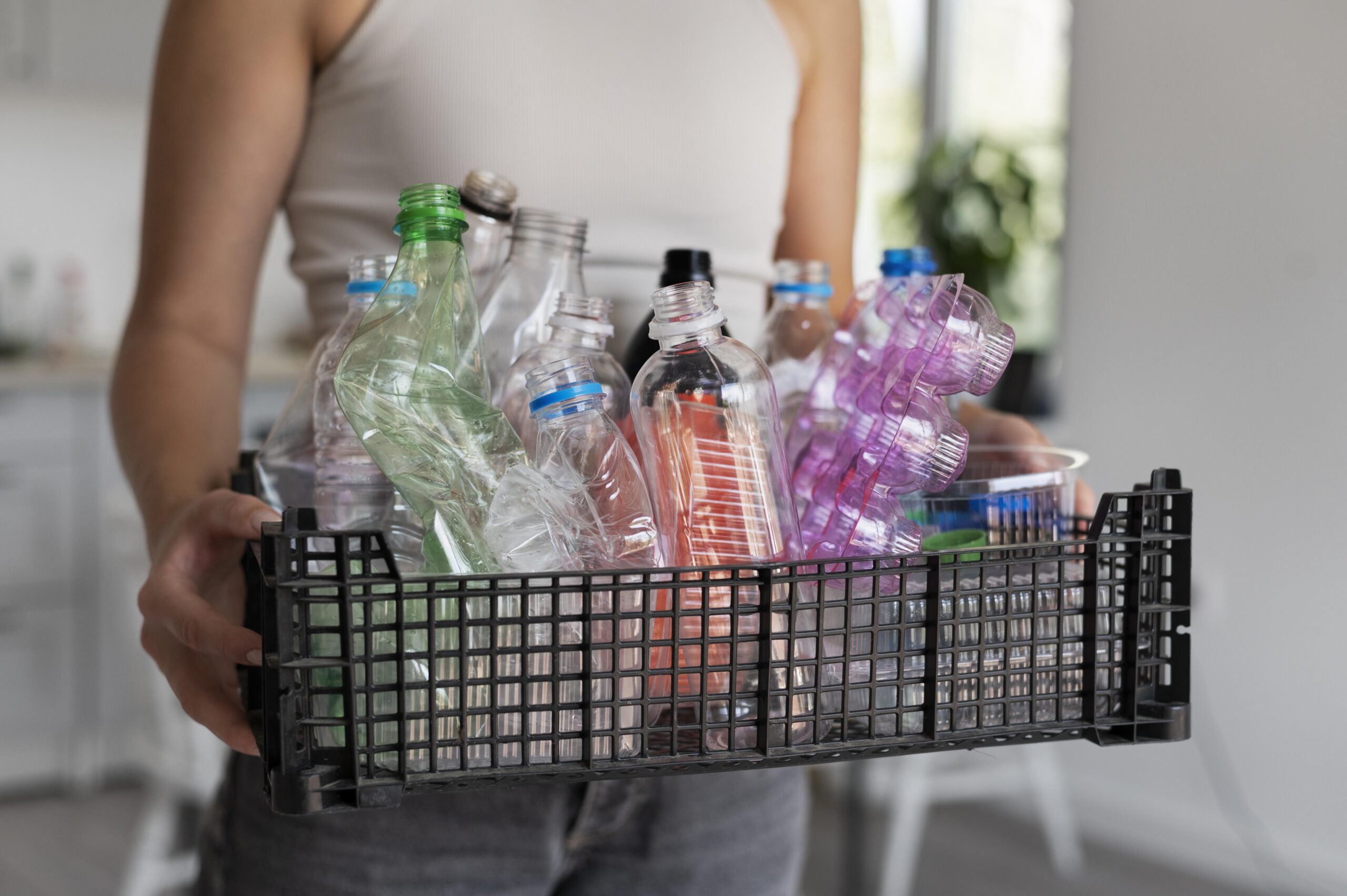
Many bottles and cans have a deposit (Pfand) symbol.
- You pay a deposit when you buy the item (e.g. €0.25).
- You return the empty bottle to a machine in the supermarket.
- You get your money back from the machine.
 Tip:
Tip:
If you are out and about, place empty deposit bottles neatly next to the trash can for people who collect them.
Language Practice: Combining Grammar and Everyday Life
When talking about waste, you often use the accusative case (e.g. „Ich werfe den Apfel in die braune Tonne“). If you want to apply these rules confidently, attend our free grammar courses at the German Institute. We practice sentence structure and prepositions for everyday life in Germany.
Tips for Your Start in Stuttgart
- Waste app: Download the AWS Stuttgart app so you never miss a collection date.
- Kehrwoche: In Stuttgart, residents often take turns cleaning the stairwell and the area in front of the bins. Ask your neighbors about the schedule.
- Ask questions: “In welche Tonne kommt das?” is a great way to practice your German with neighbors.
Summary
Remember the colors: brown (organic), blue (paper), yellow (plastic), and black (residual waste). Waste separation quickly becomes a habit. Would you like to master everyday life in Germany and improve your German at the same time? Become part of our community!
 Discover our German courses at the German Institute now!
Vocabulary Box: Waste & disposal
Here are the most important German words about trash sorting that you will need for everyday life in Stuttgart:
- der Abfall / der Müll – Everything you no longer need and throw away.
- die Mülltrennung – Sorting waste into different bins.
- die Mülltonne – The large container for waste (usually outside in front of the house).
- der Mülleimer – The small container for waste (usually in the kitchen or bathroom).
- entsorgen (Verb) – To dispose of waste or take it to a collection point.
- recyceln / wiederverwerten (Verb) – To make something new out of old material.
- der Rohstoff – A material (such as paper or metal) that can be reused.
- das Pfand – The money you pay for bottles and cans and get back when you return them.
- der Wertstoffhof – A waste site where you can drop off special and exceptionally large trash (e.g., electronic waste or furniture).
- die Kehrwoche – A Swabian tradition in Stuttgart: residents take turns cleaning the house and the sidewalk.
Test Your Knowledge: The Waste Quiz
Exercise 1: Which bin is correct?
Assign the waste to the appropriate color.
- An old newspaper belongs in the __________ bin.
- You throw banana peels in the __________ bin.
- An empty yogurt cup goes in the __________ bin.
- A broken toothbrush belongs in the __________ bin.
Exercise 2: Fill in the gaps
Use the words: pfand, dispose of, recycling center, separate, waste glass
- In Germany, you have to _________ your trash properly.
- Empty wine bottles are __________ and belong in the container on the street.
- When I return the cola can, I get €0.25 __________.
- I am not allowed to throw my old TV in the household waste. I have to take it to the __________.
- How can I safely __________ these old batteries?
Exercise 3: True or false?
Test your knowledge of the system in Stuttgart.
- In Stuttgart, plastic packaging is usually disposed of in the yellow bin. (True / False)
- Glass can be disposed of in the containers on Sunday nights. (True / False)
- The “Kehrwoche” means that you have to keep the area around the garbage cans clean. (True / False)
- Dirty pizza boxes with a lot of grease belong in the blue bin. (True / False)
Solutions
Exercise 1: 1. blue, 2. brown, 3. yellow, 4. black/gray
Exercise 2: 1. separate, 2. waste glass, 3. pfand, 4. recycling center, 5. dispose of
Exercise 3: 1. Correct, 2. Incorrect (observe quiet hours!), 3. Correct, 4. Incorrect (residual waste)
Responses